In this section we look at what happens after a death, both immediately and in the following days, weeks and months. We cover the practical aspects and also give some suggestions about dealing with grief and bereavement.
Whilst the legal requirements and most of the resources recommended here relate specifically to the UK, the process and considerations are likely to be broadly similar elsewhere. Readers will need to research specific legal requirements and resources in other countries.
The Practicalities
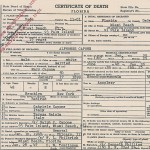 When someone dies, depending on the circumstances, there are various legalities and formalities that need to be attended to. If the death is expected and occurs in a hospital or hospice, then the attending staff will take care and inform you of anything that needs to be done regarding the legalities. If death is of natural causes and the person dies at home, you are required to call your doctor. He or she will confirm the death and provide a Medical Certificate of Cause of Death. Generally he will then inform you of additional steps you need to make, such as contacting an undertaker and registering the death. If the death is unexpected, accidental or criminal, the police need to be called immediately – they will bring a doctor to certify the death. In some cases – such as a death following an industrial disease where the coroner needs to be notified – the police will also need to be called.
Read more
Care of the body
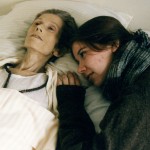 The practicalities of keeping the body at home and preparing it for the funeral yourself as well as the more conventional use of an undertaker. Embalming, preserving the body, viewing the body and keeping vigil are also discussed.
Read more
Funerals
 We ponder the question: Are funerals really necessary? Personalised funerals, ritual, low-cost funerals, guides and tips for organising a funeral, recommended resources (primarily for those in the UK).
Read more
Burial, cremation or other
 Some points about the main options of burial or cremation, as well as some new possibilities for disposing of the body with minimal environmental impact.
Read more
Celebration
 In addition to or instead of a funeral, you may wish to organise a separate celebration for a departed loved one. Here we look at some options for gathering together both physically and online.
Read more
Bereavement and Grief
 We grieve after any sort of loss, but most powerfully after the death of someone we love. It is not just one feeling, but a whole succession of feelings, which take a while to get through and which cannot be hurried. It isn’t just one feeling but a range of different emotions. We feel them most in the months – often up to 2 years, sometimes longer – after the death. After this, although life is very different, most people manage to come to terms with their loss. We look at feelings that may arise; types of bereavement and where to get help if you feel you aren’t coping.
Read more
US Resources
As the majority of links in this section refer to resources in the UK, here are some general resources for the US. We welcome suggestions of additional non-UK resources, particularly if they have relevance nationally rather than localised services.
This is a US-based, non-profit resource centre providing education on conscious, holistic, and green approaches to the end of life, including ‘home funerals. It also produces a bi-annual international magazine.
The Order of the Good Death is a group of US funeral industry professionals, academics, and artists exploring ways to prepare a death-phobic culture for their inevitable mortality. Founded by the humorous and outspoken Caitlin Doughty, a Los Angeles-based mortician and death theorist.



